Antarctic haven: protecting a global sanctuary
The Ross Sea region is one of the most pristine marine environments on Earth, and home to the world’s largest marine protected area. Aotearoa New Zealand helped lead the international effort to protect it and continues to support the science that will help safeguard its future.
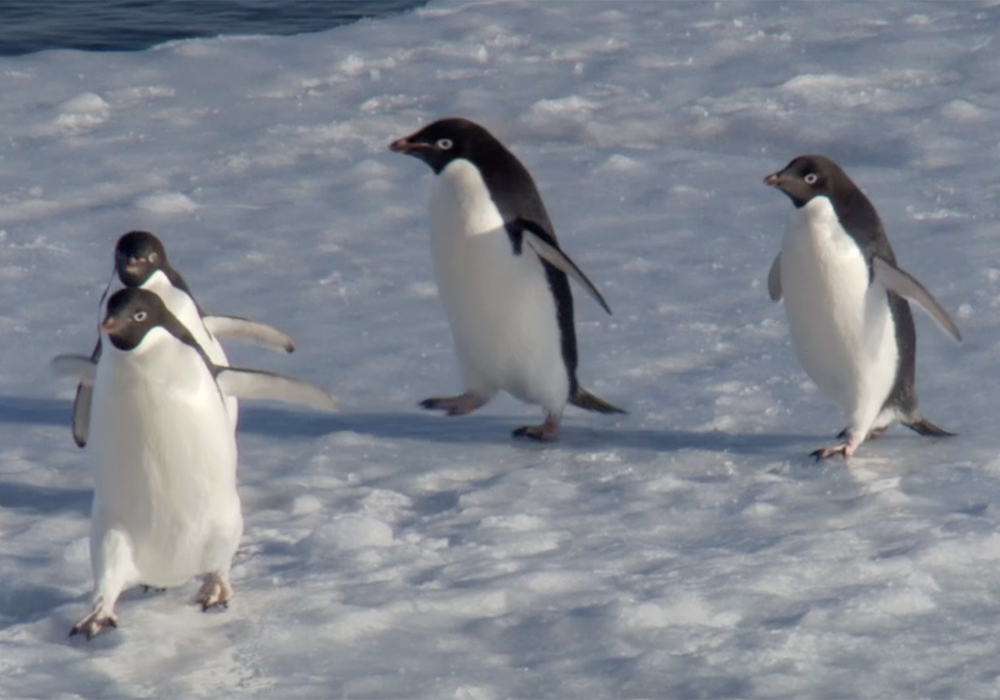
Head south from New Zealand and you’ll reach the Ross Sea, a vast stretch of the Southern Ocean that remains remarkably intact. Its rich marine life is still connected in ways largely untouched by human activity, from microscopic plankton through to Antarctic toothfish, Weddell seals, penguins and killer whales.
The region is one of the most important marine habitats on the planet. It supports more than 30 percent of the world’s Adélie penguins, around a quarter of all emperor penguins, around 30 percent of Antarctic petrels, and more than half of South Pacific Weddell seals.
The Ross Sea region contains the world’s largest marine protected area (MPA). It is about 1.5 times the size of the largest national park on land and covers 1.55 million square kilometres, of which 1.12 million square kilometres is fully protected.
The MPA was the result of unanimous support for a joint New Zealand/United States proposal within the 25-member Commission for the Conservation of Antarctic Marine Living Resources (CCAMLR). It was agreed in October 2016 after New Zealand and the United States first put forward their joint proposal in 2012. The Agreement entered into force on 1 December 2017.
Today, that agreement continues to protect biodiversity while supporting ongoing research into how the ecosystem is changing over time. It remains a landmark example of what international partnership can achieve for ocean conservation.
That research matters to the world. New Zealand scientists and partners are monitoring the Ross Sea region to better understand climate impacts, ecosystem change, and how to demonstrate the marine protected area’s effectiveness over the long term.
The Ross Sea reminds us that ocean protection is both local and global. What happens in the Southern Ocean matters far beyond Antarctica, shaping biodiversity, climate understanding and the health of our planet.
Looking for somewhere that protects places of global significance?
We know a place.
EXPLORE MORE